


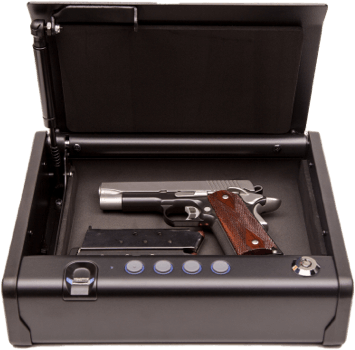
Safe storage is important—even when you might think it’s not. A tragic story out of Washington, D.C., makes that clear.
A 15-year-old girl was fatally shot in the southeast section of the District after she and another teenage girl found an unsecured handgun inside the apartment of a family friend. The girls were alone in the apartment when they found the firearm, which one of the girls picked up. It accidentally discharged, hitting and killing the other girl.
As it turns out, the firearm was not legally registered either, so the occupant of the apartment was arrested on firearms-related charges. The teen who handled the gun has not been charged.
According to Interim Police Chief Jeffery W. Carroll, of the Metropolitan Police Department, it’s a critical reminder to all gun owners. “The firearm that was inside a location was not secured, as the young people were able to access it,” Carroll said. “Obviously, anyone that has a firearm, it should always be secured.”

A growing number of states are taking action on ghost guns and Glock switches, while Virginia’s safety measures are facing pushback. Gun safety measures in Ohio and Minnesota are taking blows in the courts, while Florida is ramping up its scrutiny of AI.
In the States

Maryland, Connecticut, and New York last week became the latest states to ban Glock-style pistols.
They join California, which in 2025 became the first state to impose such a ban, and may soon be joined by Illinois, whose legislature is considering a similar provision.
Glocks and similar “convertible pistols” have drawn increasing attention from lawmakers in recent years, as they can easily be converted into fully automatic machine guns with tiny, easy-to-make devices often known as Glock switches.
Opponents of the bans say they unfairly block the use of a popular and otherwise legal style of firearm, but supporters argue that Glock and other manufacturers have chosen not to design out the easy conversion from their guns, and at the very least need to “implement reasonable safety measures.”

Meanwhile, New York and California are taking steps to prevent the creation of another controversial class of firearms.
With the same budget bill in which it banned Glock-style pistols, New York Gov. Kathy Hochul signed into law a provision requiring 3D-printer manufacturers to build in controls that prevent users from printing parts for ghost guns.
California state Assembly lawmakers last week approved a bill mandating a similar “firearm blueprint detection algorithm.”
The restrictions face resistance from the 3D-printing community, but gun safety groups argue it is essential to clamping down on the recent surge in ghost guns recovered at crime scenes.

Virginia’s new gun safety measures are facing another hurdle, this time from the state’s own prosecutors.
A group of prosecutors are vowing not to enforce the ban on assault-style firearms and large-capacity magazines signed into law last month, saying that they violate the 2nd Amendment.
The prosecutors aren’t the first to push back against the new measures, with gun rights groups quick to file lawsuits after the bans and a slew of other restrictions were signed into law.
The state and gun rights advocates say the measures are essential to addressing gun violence and called on the attorneys to “uphold the rule of law and keep Virginians safe.”
Our view? We applaud anyone trying to address gun violence, but we believe there’s something better than bans.
In the Courts
Ohio’s Supreme Court ruled on Tuesday that people who have been convicted of offenses that carry gun rights restrictions can petition the state to have them restored.
Federal law prohibits people convicted of certain offenses, including those related to domestic violence, from owning or using firearms.
The court ruled that federal law doesn’t prevent a state from setting that prohibition aside, despite a state ban on reinstating gun rights in certain situations.
Domestic violence advocates worry that the decision will endanger victims, a risk that dissenting Justice Jennifer Brunner reiterated in her opinion, writing that the decision “sets the stage for more serious repeat crimes to occur.”
Our research shows that the majority of gun owners oppose restoring gun rights to people with felonies.
A Minnesota appeals court last week declined to reinstate a ban on binary triggers that passed as part of a sweeping 1,400-page bill in 2024.
The decision upheld a lower court ruling, which found that the state could not instate the ban in a bill also covering so many other issues.
But that same day, another of the state’s gun laws survived its own ruling. The 8th Circuit Court of Appeals upheld Minnesota’s concealed carry reciprocity law, dismissing claims from gun owners whose licenses are not recognized by the state that the law violates their 2nd Amendment rights.
The ruling argued that legal precedent doesn’t prohibit states from setting their own licensing standards, and that the law actually expands gun rights in the state.
Finally, OpenAI is once again under scrutiny in Florida.
State Attorney General James Uthmeier has filed a lawsuit against the company and its CEO, Sam Altman, for endangering children, aiding suicide, and abetting mass shooters.
The last claim is in connection to the deadly shooting at Florida State University last year, in which the suspect allegedly consulted ChatGPT on how to carry out the shooting.
OpenAI claims that it has “put in place industry leading protections and policies,” but Uthmeier says they have “chosen profit over public safety.”
It’s the first case of its kind, and marks another development in a growing conversation around the consequences of AI on gun violence.
Want to know more about AI’s impact on violence and other emerging threats? We break it down here.
Do you have a comment about any of these critical issues? Do you have a story to share? We’d love to hear from you. Please include your first name and state, and we may publish it in a future issue. Thank you for reading!
For more information about 97Percent, please visit our website at 97Percent.us.
Join our growing community of gun owners and non-gun owners united to reduce gun deaths in America.