


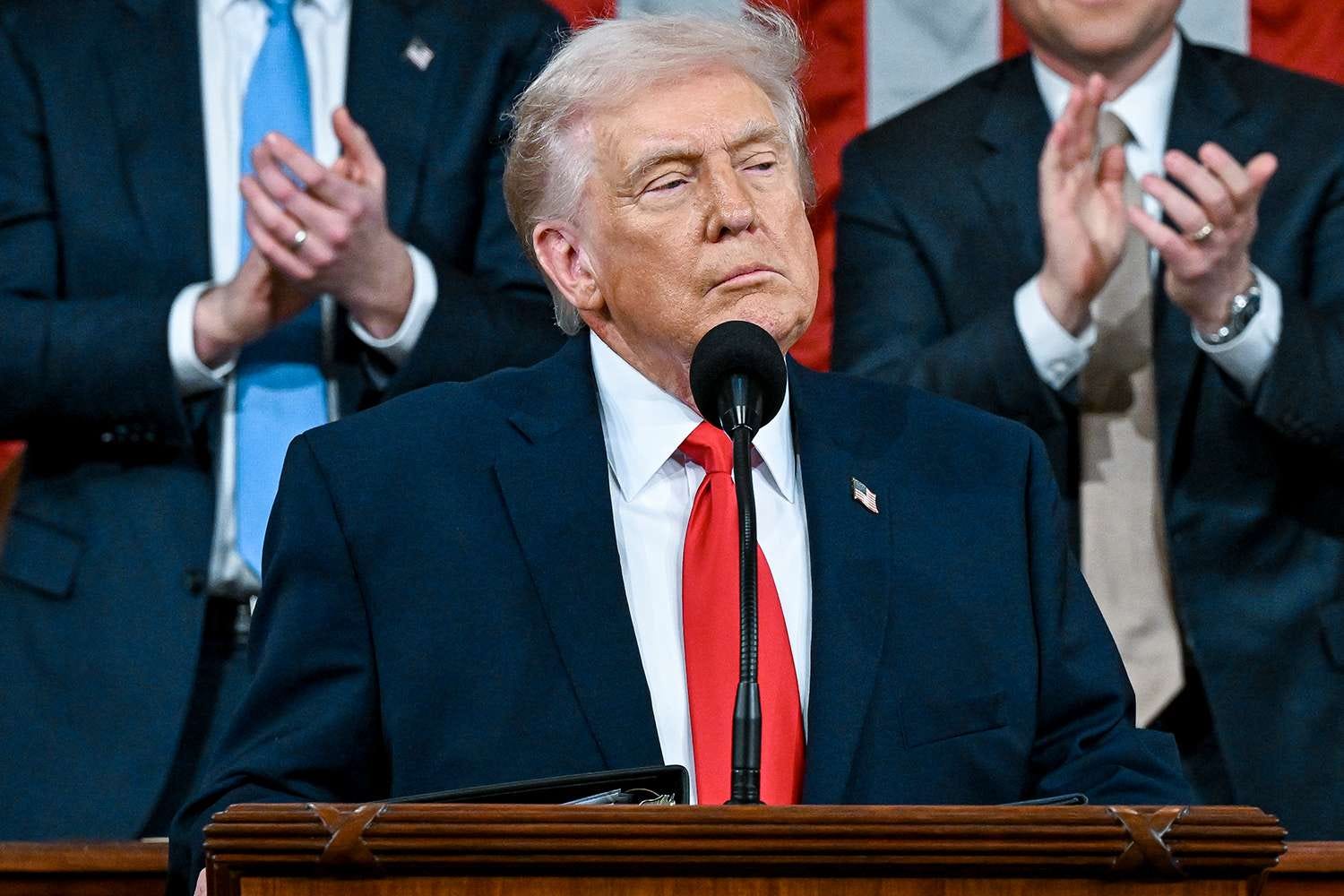
On Tuesday evening, President Trump delivered the longest State of the Union speech in American history. But while he covered a range of topics over an hour and 45 minutes, one topic he did not address was guns. Similar to the unified reaction of gun rights and gun safety advocates to the shooting of Alex Pretti by border control agents last month—and the administration’s response to it—both sides were perturbed and somewhat bewildered by the lack of attention to the issue.
Gun violence remains the number one cause of death for children and teens in the U.S. There are nearly 47,000 gun-related deaths in the U.S.—roughly 128 per day—every year. That’s more than car accidents, brain cancer, pneumonia, and other relatively common causes. Our surveys of gun owners consistently show that they are as concerned about gun violence as non-gun owners. Our most recent study shows that 75% of gun owners, including 69% of registered Republicans, consider the issue of gun violence to be an “emergency” or “major problem.” Further, nearly 8 out of 10 gun owners, including 75% of registered Republicans, strongly or somewhat agree that gun violence is weakening the social fabric of American life by making people feel unsafe in public places.
Americans don’t just care about gun violence after high-profile mass shootings; it’s a daily concern for the majority of us, gun owners and non-gun owners alike. It’s time to start treating it as one.

The Department of Veterans Affairs will no longer report veterans to the FBI’s National Instant Criminal Background Check System (NICS) solely because they participate in the VA’s fiduciary program.
The fiduciary program appoints a third party to manage VA benefits for veterans who cannot handle their finances on their own due to injury, illness, disability, or age.
Historically, once a veteran was placed in the program, they were also reported to NICS, which prevented them from purchasing or possessing a firearm.
A legal review concluded that fiduciary status alone does not satisfy statutory requirements for NICS reporting, which usually requires a court to find someone mentally incompetent or dangerous.
This is good news. At 97Percent, we opposed this decades-old practice. Back in 2023, we wrote:
The Senate is currently voting on amendments to its spending minibus for fiscal 2024, which includes funding for veterans programs. Last Wednesday, several Democrats joined Republicans to adopt an amendment that could impact U.S. veterans—roughly half of whom are also gun owners. The amendment overturns a Department of Veterans Affairs requirement to send a veteran’s name to the FBI’s National Instant Criminal Background Check System if a financial professional has been appointed to help them manage their VA benefits. The amendment would preserve gun rights for such veterans, unless a judge rules that they are a danger to themselves or others.
We say: We applaud the bipartisan work to protect veterans’ rights and due process.
An FBI shooting reconstruction team was delayed in its response to the mass shooting at Brown University on Dec. 13 due to FBI Director Kash Patel’s “poor management” of FBI aircraft, according to a whistleblower report.
An FBI whistleblower claims that Patel put the FBI’s hostage rescue unit on standby, which reserved an FBI plane for the specialized counterterrorism unit—preventing the reconstruction team from traveling more swiftly from Virginia to Providence.
The Brown shooter, Claudio Manuel Neves Valente, went on to kill Massachusetts Institute of Technology professor Nuno Loureiro three days after the shooting at the university. Neves Valente was found dead of a self-inflicted gun shot at a storage facility on Dec. 18.
Sen. Dick Durbin said previous whistleblower disclosures assert that “the director’s personal flights” had also delayed the response by the shooting reconstruction team to the shooting of Charlie Kirk in Utah last September by at least a day.

In the States
Virginia lawmakers are on their way to making the state safer, but lawmakers in other states are working to roll back a number of gun safety policies.
VIRGINIA: The state’s general assembly, which is debating various ways to prevent gun violence, has advanced a gun safety legislation package that mandates safe storage of firearms.
Also under consideration are measures that would prohibit the importation, sale, or possession of so-called assault weapons; clarify tracking standards for ghost guns; and increase civil liability for the firearm industry.
The safe storage bill now heads to Gov. Abigail Spanberger’s desk. She has previously pledged support to a ban on assault-style weapons as well.
Polls show that Virginians back tighter gun laws, but they’re not entirely convinced they will be effective.
MINNESOTA: State Democratic lawmakers are renewing an effort to pass new gun safety laws after several high-profile shootings last summer and a subsequent failed effort to pass measures in response.
On Tuesday, Gov. Tim Walz announced a gun violence prevention package that includes 15 proposals, including a ban on assault-style weapons; a high-capacity magazine ban; a ban on binary triggers, which double the rate of fire of a semiautomatic firearm; additional school safety measures; requiring the safe storage of firearms; and mandatory reporting of lost or stolen firearms.
Republicans and some Democratic legislators were not on board with the proposals last year, and negotiations broke down.
Lydia Kaiser, an eighth-grader who survived being shot in the head during the mass shooting at Annunciation School in Minneapolis last August, addressed lawmakers: “All children have the right to live free from gun violence in schools, churches, and in our communities. Elected officials have a duty to protect us from guns. No one should have to go through what we went through at Annunciation.”
SOUTH DAKOTA: South Dakota has made a shift in the opposite direction of both Virginia and Minnesota.
The state’s governor signed a bill earlier this month that deregulates suppressors—also known as silencers—by removing them from the state’s definition of a controlled weapon.
Gov. Larry Rhoden said the bill is the first of its kind in any state.
Supporters argue that suppressors are “hearing protection” rather than weapons, but gun safety groups argue that they can worsen shootings by slowing identification of and reaction to gunshots.
WEST VIRGINIA: The state’s Senate has approved a bill which would allow 18- to 20-year-olds to conceal-carry a firearm without a provisional license.
Supporters argue that if an 18-year-old can be sent to war, then they should be granted broad gun rights, too.
Sen. Joey Garcia, the only legislator to vote no, worries that the loss of the training course, which is part of the permitting process, will put safety at risk.
The bill is now under debate in the House of Delegates.
Studies show that age limits on gun purchases can help curb violence, and our research shows that 41% of gun owners believe they are effective. What do you think of these and other new state proposals?
In the Courts
In the Third Circuit, two cases before an en banc (all the judges of the court) appeals panel could affect gun safety laws nationwide.
NEW JERSEY. One case concerns whether New Jersey’s law banning firearms in “sensitive places”–- including parks, zoos, and libraries—violates the Second Amendment.
Gun rights groups argue the state has defined “sensitive places” so broadly that it effectively eliminates the right to carry firearms in public.
But New Jersey maintains that historical tradition supports restricting guns in certain public gathering spaces, which would make it valid under the Bruen test.
The case could set an important precedent around how far states can go in restricting public carry in a post-Bruen landscape.
PENNSYLVANIA. The other case addresses whether a Pennsylvania man who lost his gun rights after a DUI conviction can have them restored, and whether he must first seek relief through a revived federal restoration process.
A lower court ruled there is no historical tradition of disarming nonviolent offenders like drunk drivers.
The federal government disagrees, arguing that administrative remedies must be exhausted first.
This case could have sweeping implications for who can be permanently barred from firearm ownership nationwide. Stay tuned.
What’s the Bruen test? Check out our explainer here.
Do you have a comment about any of these critical issues? Do you have a story to share? We’d love to hear from you. Please include your first name and state, and we may publish it in a future issue. Thank you for reading!
For more information about 97Percent, please visit our website at 97Percent.us.
Join our growing community of gun owners and non-gun owners united to reduce gun deaths in America.