

SCOTUS Strikes Outdated Marijuana Law
News Wrap — June 26, 2026

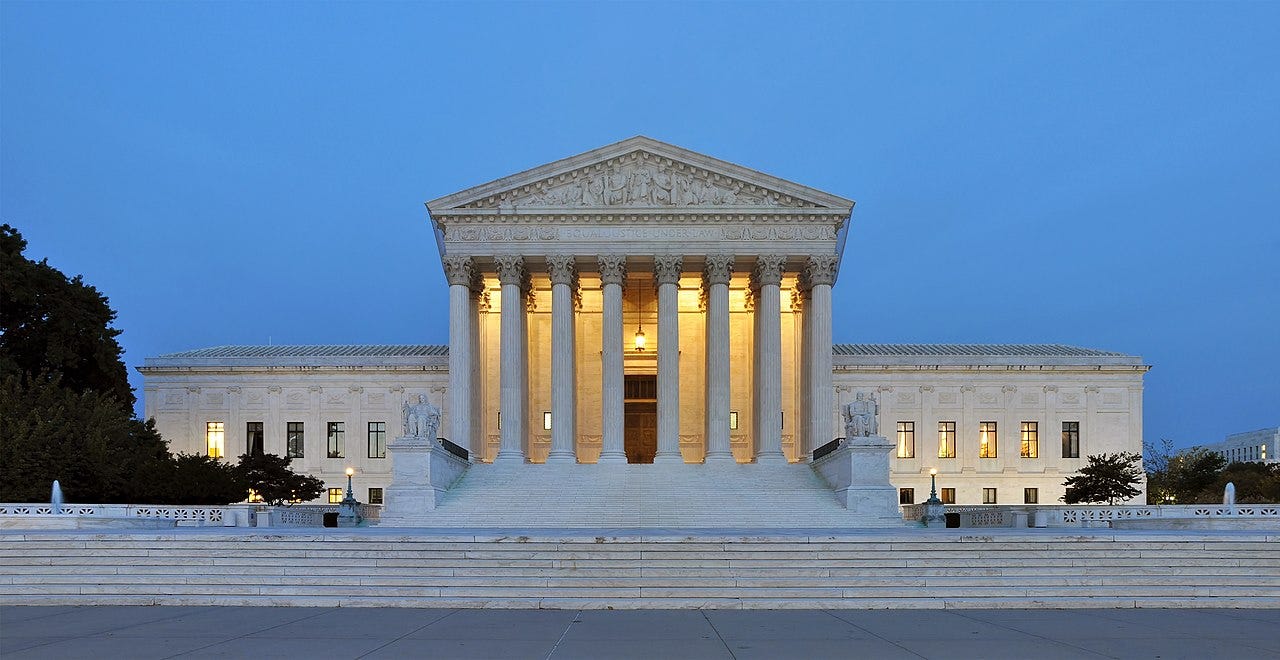
After months of deliberation, the U.S. Supreme Court arrived at a decision in United States v. Hemani on June 18, ruling that the federal government cannot automatically bar gun ownership for habitual users of marijuana. The justices unanimously agreed that the conviction of a Texas man for owning a gun while regularly using marijuana violated his 2nd Amendment rights.
The court’s primary argument? The conviction failed to pass the Bruen test. The justices wrote that historical analogues restricting gun rights for certain individuals “targeted different kinds of people, did so for different reasons, and operated in different ways” than the ban on firearms for users of controlled substances. Notably, the decision does not invalidate bans on gun ownership for drug addicts or users of specific dangerous drugs, but it does undo a long-standing overarching ban for users of controlled substances of any kind.
We concur with the court’s decision. Last October, we wrote the following about this case:
At 97Percent, we support laws that keep guns away from those with an elevated risk of committing a violent act while protecting the 2nd Amendment rights of law-abiding gun owners. In this case, a narrow ruling that allows the law to stand with a carve-out for users of legally obtained marijuana, with no criminal or domestic violence history, makes the most sense to us.
We’re glad the justices saw it the same way.
Check out our full deep dive on Hemani, with the details, history, and implications of this landmark case.

In the States
Two governors have signed gun safety measures into law while another has vetoed a slew of bills aiming to restrict gun safety policies.

Gov. Mike DeWine last week signed the “Keep Them Safe Act” into law.
The law allows individuals experiencing a mental health crisis to protect themselves from self-harm by temporarily storing their firearms with participating gun shops and law enforcement officers.
It passed the state’s legislature with a level of bipartisan support that is highly uncommon in gun safety policy, and research shows that it is a popular solution among gun owners.
Gun violence prevention groups are optimistic, too, saying the law “means lives will be saved” and further gun safety measures “will come.”
At 97Percent, we believe that separating gun owners from their firearms in times of crisis is a common-sense policy that works.

Also signing bills into law in recent days was Virginia Gov. Abigail Spanberger.
Last Tuesday, she signed more than two dozen gun safety bills, including a ghost gun ban, expanded safe storage measures, and new rules for Extreme Risk Protection Orders (ERPOs), commonly known as red flag laws, that allow family and other community members to petition for them.
The laws add to a number of other gun safety bills she has approved, including a ban on assault weapons and a bill raising the minimum age to own a handgun or rifle to 21.
While many of these bills are facing pushback from gun rights groups, our research shows that some of the policies they establish are supported by a majority of gun owners, including strong ERPO provisions and safe storage measures.

Things look a little different in Arizona, where the Gov. Katie Hobbs is using her veto power to block a number of bills aiming to erode gun safety measures.
Her most recent vetoes were of two bills that would have prevented universities from limiting concealed carry on campuses and removed silencers from the state’s banned weapons list.
They add to a record-breaking litany of vetoes she has made over the past two years, including of bills to limit tracking of firearms sales and remove concealed carry restrictions in restaurants.
Gun rights advocates have condemned many of the vetoes, but supporters say she has protected measures that help law enforcement trace criminals and prevent violence.
In the Courts
Beyond the Hemani ruling, the U.S. Supreme Court has had a busy couple of weeks deciding 2nd Amendment-based cases, invalidating an application of a long-standing law, while leaving another intact. In lower courts, Virginia’s assault weapons ban survived a legal challenge.
The high court declined to hear a challenge to a New York law enabling lawsuits against gun manufacturers who fail to safeguard their products against gun trafficking and theft.
The challenge was brought by a gun industry trade group and gun manufacturers, who claim that the law contradicts federal law and imposes “crushing liability” on manufacturers for crimes not committed by them.
However, it was upheld by a lower court, which said that the federal law allows “at least some causes of action” where manufacturers consciously fail to adhere to gun sales regulations.
SCOTUS’ refusal to hear the case leaves this ruling unchallenged, and is an unusual move from a court that has generally ruled against firearms restrictions in recent years.
Virginia’s assault weapons ban also survived a legal challenge this week, with a circuit court judge declining to block the law.
The challengers argued that it violates a provision in the state’s constitution guaranteeing the right to a “well regulated militia” by banning a firearm “suitable for militia service.”
However, the state contended that its governor has authority over that militia and that assault weapons pose a public safety risk severe enough to justify intervention.
The judge’s decision leaves the law in force for now, but it faces a number of ongoing lawsuits and resistance from local prosecutors.
The Supreme Court also rendered its decision in Wolford v. Lopez this week. We’ll bring you a full analysis of this decision in a future edition.
Do you have a comment about any of these critical issues? Do you have a story to share? We’d love to hear from you. Please include your first name and state, and we may publish it in a future issue. Thank you for reading!
For more information about 97Percent, please visit our website at 97Percent.us.
Join our growing community of gun owners and non-gun owners united to reduce gun deaths in America.